

 Coir Fiber
 Husk Chips






From Coconut Husk to Export-Ready 5kg Coco Peat Blocks: The Complete Manufacturing Process
 By Fibora Admin
4 days ago
By Fibora Admin
4 days ago
Introduction
Coco peat has become one of the world's most preferred growing media for horticulture, hydroponics, greenhouse farming, nurseries, and modern agriculture. Farmers across Europe, North America, the Middle East, Australia, and Asia rely on high-quality coco peat because of its excellent water retention, aeration, and environmentally friendly nature.
But have you ever wondered how a simple coconut husk is transformed into a premium export-quality coco peat block?
At Fiber Particles, every production stage is carefully monitored to ensure that only high-quality coco peat reaches our international customers. From raw coconut husks to compressed 5kg export blocks, every process plays an important role in maintaining quality and consistency.
In this article, we will take you through the complete manufacturing journey of coco peat.
Step 1 – Collection of Coconut Husks
Everything begins with coconut husks.
After coconuts are harvested for food, oil, milk, and other products, the outer husk remains as a natural by-product. Instead of treating this valuable material as waste, it is collected and transported to coir processing units.
Since coconut trees are renewable, coconut husks provide a sustainable raw material without harming the environment.
This makes coco peat one of the most eco-friendly growing media available today.
Step 2 – Fiber Extraction
The collected coconut husks are processed using specialized defibering machines.
During this stage, the machine separates two valuable products:
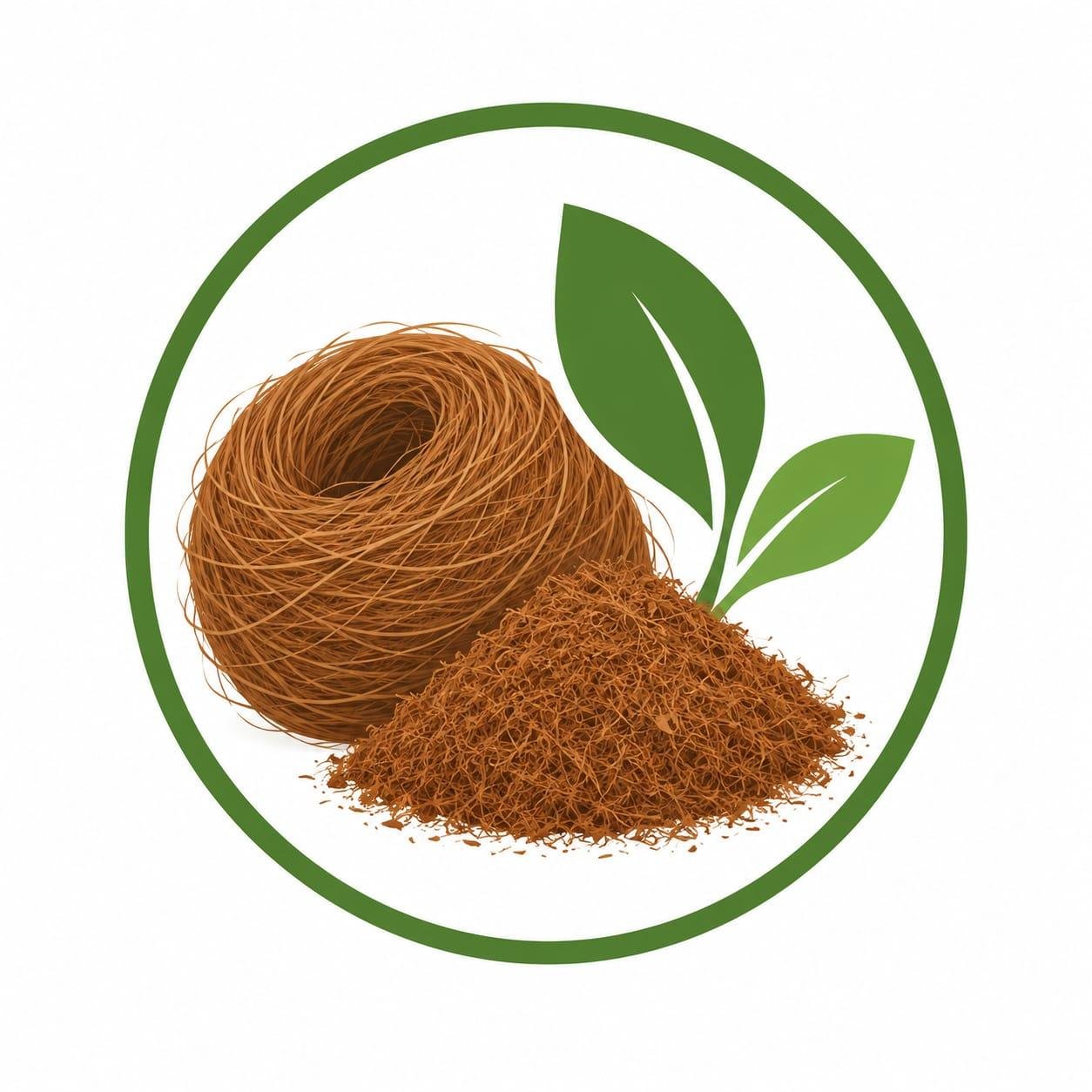
• Coir Fiber
• Raw Coco Peat (Coir Pith)
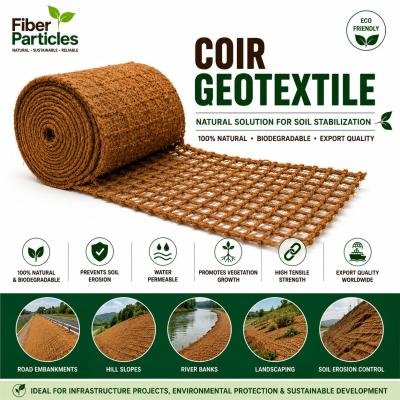
Coir fiber is widely used for ropes, mattresses, brushes, erosion control products, and geotextiles.
The remaining fine brown material is known as coco peat or coir pith.
Although this material appears ready, it still contains dust, fine particles, salts, and natural minerals that require further processing before export.
Step 3 – Washing Process (Reducing EC)
One of the most important stages in coco peat manufacturing is washing.
Fresh coco peat naturally contains soluble salts such as sodium and potassium.
These salts increase the EC (Electrical Conductivity) level.
Different crops require different EC levels.
To achieve export-quality standards, the coco peat is thoroughly washed with clean water.
This washing process helps remove excess salts and improves product quality.
Proper EC reduction ensures that the final product is suitable for hydroponics, greenhouse farming, nurseries, seed germination, and professional agriculture.
Step 4 – Natural Sun Drying
After the washing process is completed, the coco peat contains a high level of moisture. Before it can be compressed into export-quality blocks, this excess moisture must be removed carefully.
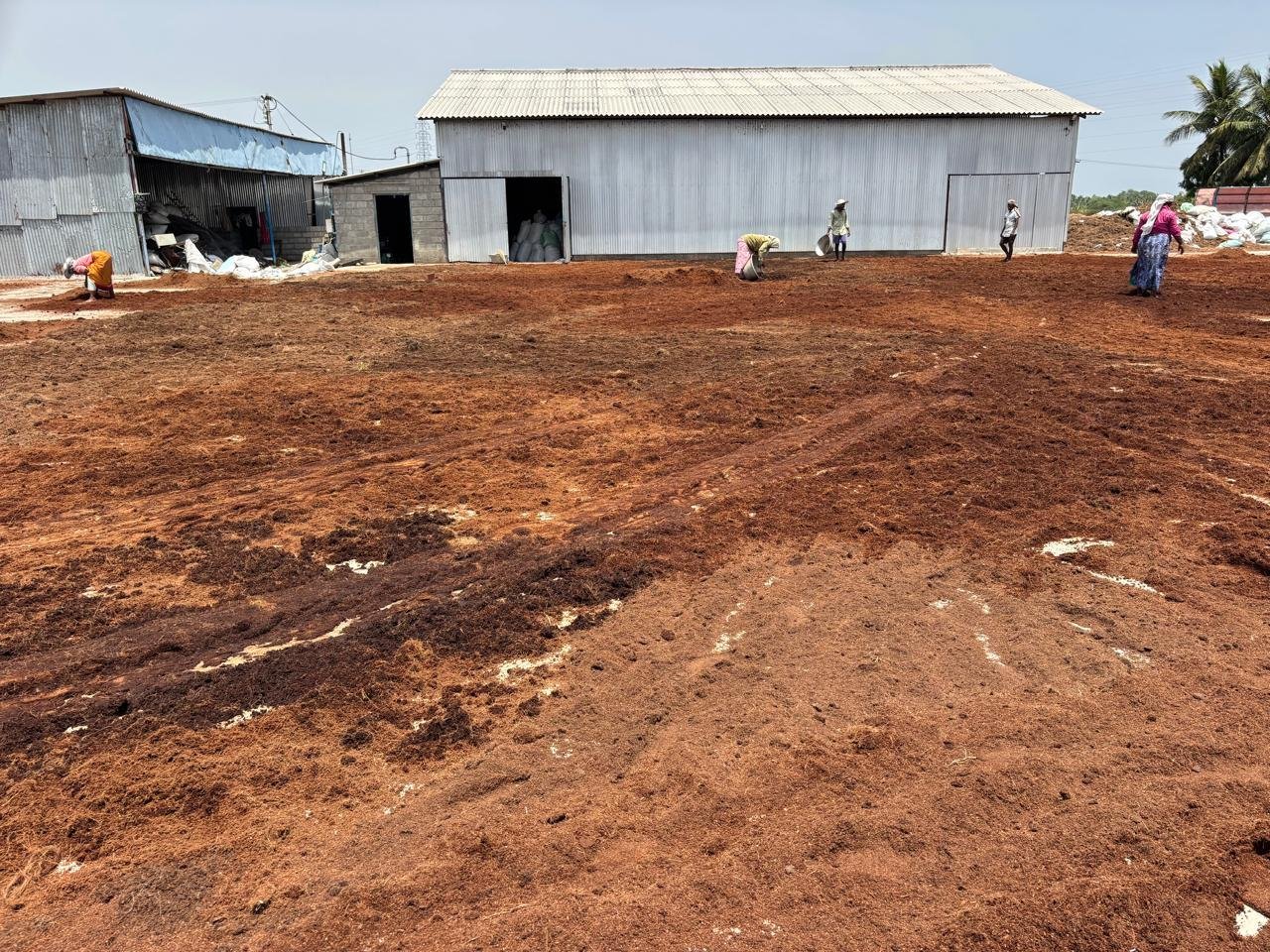
At this stage, the washed coco peat is spread evenly across large drying yards under natural sunlight. The material is turned and spread regularly to ensure uniform drying throughout the entire batch.
Natural sun drying is one of the most important stages in the manufacturing process. It helps reduce moisture content while preserving the natural structure of the coco peat. Proper drying also prevents mold growth, maintains product stability, and improves storage life during international transportation.
At Fiber Particles, every batch is allowed to dry naturally until it reaches the required moisture level for further processing.
Step 5 – Screening and Quality Inspection
Once the coco peat has dried sufficiently, it is carefully screened using specialized equipment to remove oversized particles, unwanted fibers, stones, and other impurities.
Quality control professionals inspect every batch to ensure consistency in texture, cleanliness, and particle size. Depending on customer requirements, different grades of coco peat can be prepared for various agricultural applications.
Maintaining strict quality standards at this stage ensures that only clean and uniform coco peat proceeds to the next manufacturing process.
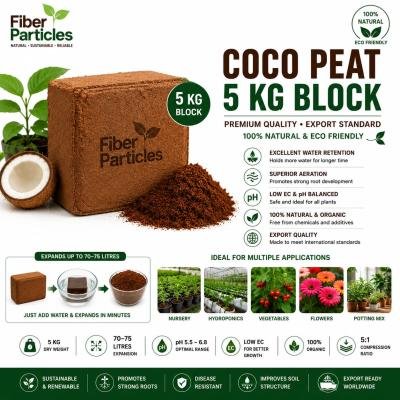
Step 6 – Compression into 5kg Coco Peat Blocks
After passing quality inspection, the dried coco peat is transferred to hydraulic compression machines.
These powerful machines compress loose coco peat into compact 5kg blocks. Compression significantly reduces the product volume, making transportation and storage more efficient while maintaining the product's excellent expansion properties.
When water is added, the compressed block expands into a large volume of loose coco peat, making it ideal for nurseries, hydroponics, greenhouse cultivation, horticulture, landscaping, and commercial farming.
Each compressed block is manufactured with consistent density and dimensions to meet international export standards.
Step 7 – Packaging for International Export
Once the coco peat blocks have been compressed, they are carefully packed using durable export-quality packaging materials. Every block is checked before packing to ensure it meets the required weight, dimensions, and quality standards.
Proper packaging protects the product from moisture and damage during transportation. Each package is prepared to withstand long-distance shipping, ensuring that customers receive the product in excellent condition.
Packaging can also be customized according to customer requirements, including private labeling, palletizing, and container loading arrangements.
Step 8 – Container Loading and Worldwide Export
After packaging, the finished coco peat blocks are loaded into export containers following proper loading procedures.
Efficient container loading maximizes shipping capacity while ensuring product safety during international transportation.
Fiber Particles supplies premium-quality coco peat products to importers, distributors, horticultural suppliers, hydroponic growers, and agricultural businesses across the world.
Every shipment is prepared with a strong focus on quality, consistency, and customer satisfaction.
Why High-Quality Coco Peat Matters
Choosing high-quality coco peat can make a significant difference in plant growth and crop performance.
Premium coco peat offers:
- Excellent water retention
- Better root aeration
- Low EC options for sensitive crops
- Uniform texture and consistent quality
- Eco-friendly and renewable growing media
- Easy transportation due to compressed blocks
These advantages make coco peat one of the most preferred growing media for modern agriculture and professional cultivation.
Why Choose Fiber Particles?
At Fiber Particles, we believe that quality begins with the manufacturing process.
From carefully selected coconut husks to washed, sun-dried, screened, compressed, and export-ready coco peat blocks, every stage is managed with attention to detail.
Our commitment is to deliver products that meet international quality standards while supporting sustainable agriculture around the world.
Whether you are an importer, distributor, greenhouse grower, hydroponic supplier, or agricultural business, Fiber Particles is ready to become your reliable long-term partner.
Conclusion
The journey from a simple coconut husk to an export-ready 5kg coco peat block involves several carefully controlled stages. Every process—from fiber extraction and EC reduction to sun drying, quality inspection, compression, and export packaging—plays an important role in producing premium-quality coco peat.
As global demand for sustainable growing media continues to increase, high-quality coco peat has become an essential choice for modern agriculture.
Fiber Particles is proud to contribute to this growing industry by manufacturing and supplying reliable export-quality coco peat products to customers worldwide.
📞 Contact Us
Fiber Particles
🌐 Website: https://www.fiberparticles.com
📧 Email: fiberparticles@gmail.com
We welcome importers, distributors, wholesalers, and commercial growers from around the world.
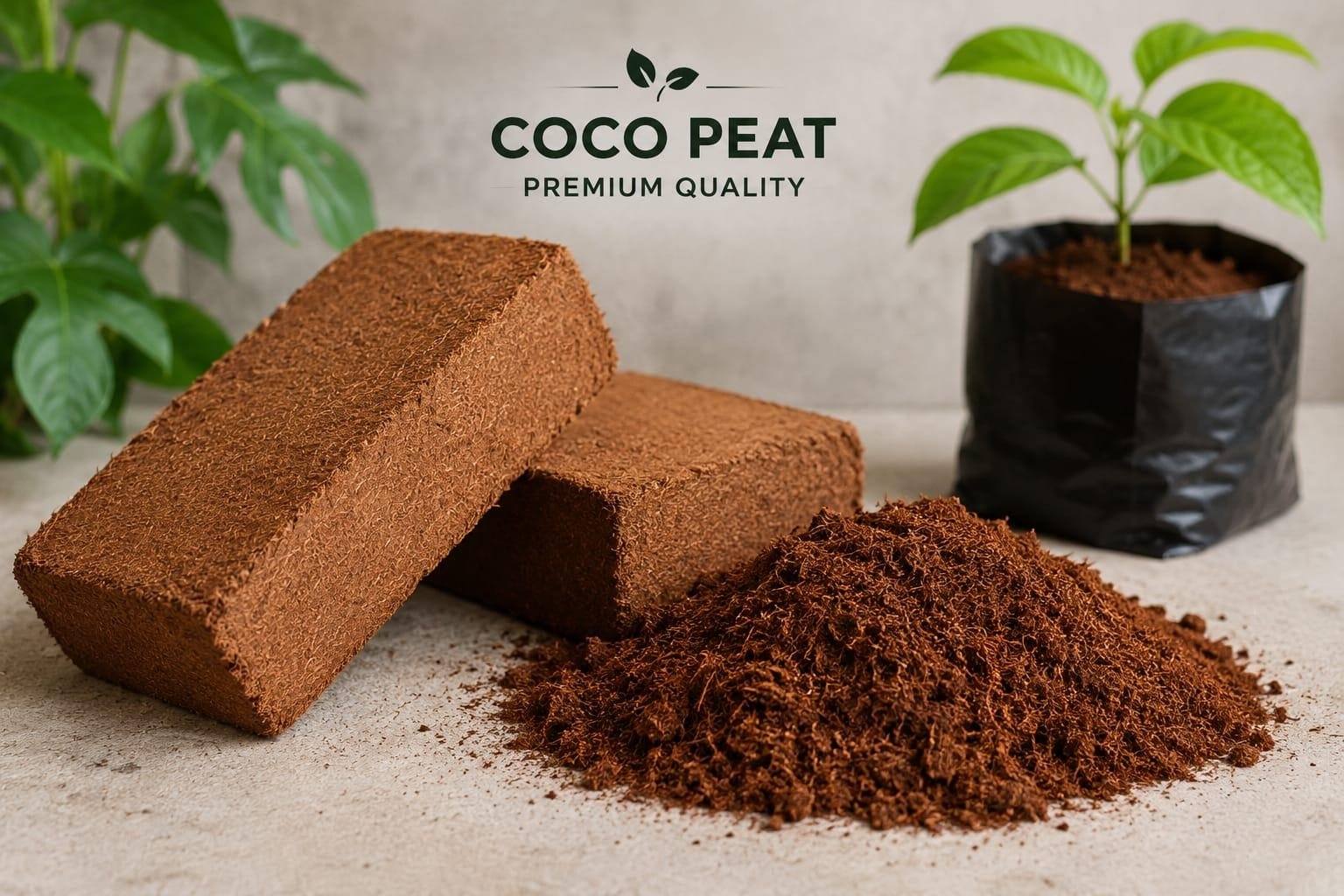 Coco Peat Blocks